Winning Streaks Are a Story Your Brain Writes: The Math Behind Casino Hot Hands
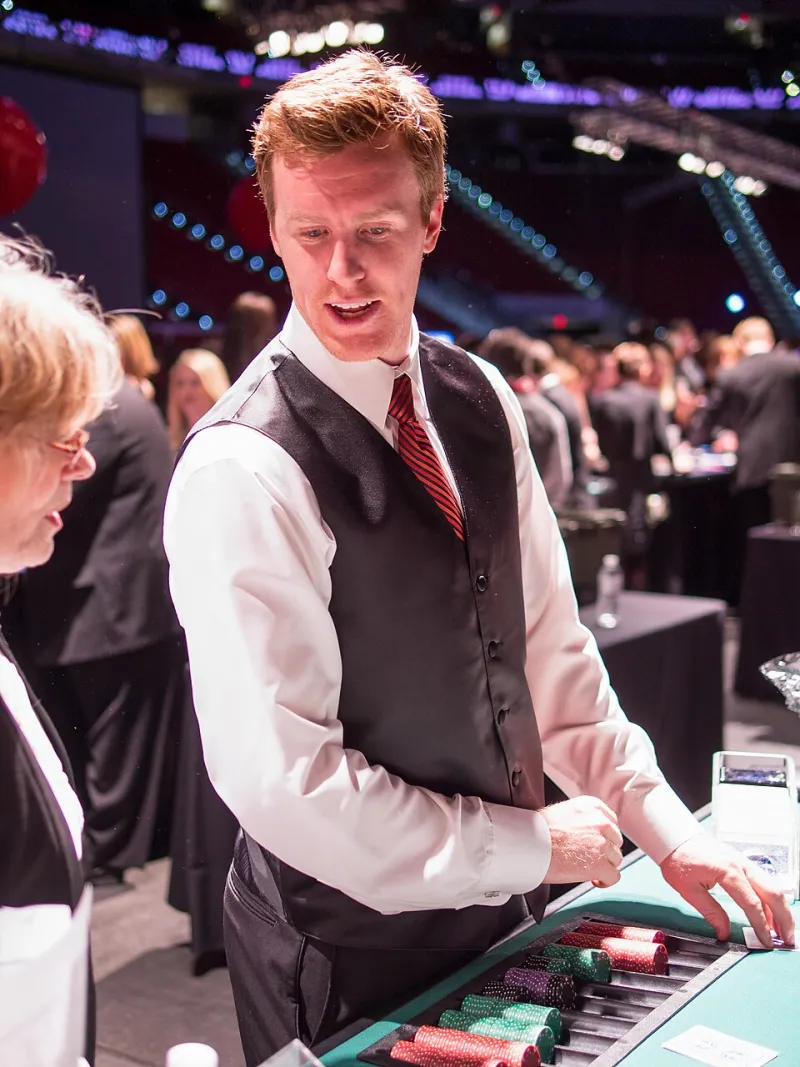
Photo: blackjack cards on casino table close up dramatic lighting, via slotslaunch.nyc3.digitaloceanspaces.com
You're four hands deep into a blackjack session, you've won three of them, and something clicks. You feel locked in. You start betting bigger. Maybe you skip the strategy chart because right now, you just know. Sound familiar?
Here's the uncomfortable truth: that feeling is one of the most expensive things in a casino. Not because winning streaks aren't real — they absolutely happen — but because the meaning we assign to them is almost entirely fiction. And that fiction costs players real money every single day.
Let's break down what's actually going on.
What Variance Actually Means (And Why It Sounds Boring Until It Costs You Money)
Variance is a statistics term that describes how spread out results are around an average. In plain English: it explains why things don't always look like they're "supposed to" in the short run.
Flip a fair coin 10 times. You might get 7 heads and 3 tails. That's not a rigged coin — that's variance doing its thing. Run that same experiment a million times, and you'll land very close to 50/50. But in any short window? Anything goes.
Online casino games work exactly the same way. Blackjack, with basic strategy, carries a house edge somewhere around 0.5%. That means over millions of hands, the casino wins about 50 cents per $100 wagered. But in a single session of 50 or 100 hands? You could be up 30%, down 40%, or anywhere in between. The math hasn't failed — it's just operating on a longer timeline than your session.
Winning streaks are simply variance clustering on the positive side. Losing streaks are the same thing on the negative side. Neither one is a signal.
Your Brain Hates Randomness (And Is Trying to Help)
Here's where it gets interesting. Humans are pattern-recognition machines. We evolved to find meaning in noise — spotting the tiger hiding in the tall grass was a survival advantage. The problem is that same hard-wired instinct fires constantly in environments where there's no pattern to find.
Psychologists call this apophenia — the tendency to perceive meaningful connections between unrelated things. Casinos are basically apophenia factories. Lights, sounds, near-misses, and yes, winning streaks all trigger the same pattern-seeking circuits in your brain.
When you win three hands in a row, your brain doesn't log it as a random cluster. It logs it as evidence. Evidence that you're playing well, that tonight is your night, that something has shifted in your favor. None of that is true, but the feeling is completely real — and that gap between feeling and reality is exactly where bankrolls go to die.
The Gambler's Fallacy's Sneaky Cousin
Most casino players have heard of the gambler's fallacy — the mistaken belief that past results influence future ones. After five reds in a row on roulette, the wheel doesn't "owe" you a black. Every spin is independent.
But there's a less-discussed flip side called the hot hand fallacy, and it's arguably more dangerous because it feels more rational. Instead of thinking the table owes you a correction, you think the table is rewarding you. You're on a roll. You're in the zone. So you press your bets.
Research from behavioral economists including those behind the famous work of Kahneman and Tversky shows that humans consistently overestimate the persistence of streaks. We're not just bad at recognizing randomness — we're predictably bad in specific directions. We think good runs will continue. We think we can feel momentum.
Spoiler: we can't. The cards don't know you've been winning.
What Probability Clustering Looks Like in Practice
Let's put some numbers to this. Say you're playing blackjack with a win rate of roughly 47% per hand (accounting for pushes and the house edge). Run a simulation of 100 hands and you'll frequently see sequences of five, six, even seven consecutive wins. These aren't anomalies — they're statistically expected.
In a 100-hand session, the probability of hitting at least one streak of five wins in a row is actually quite high — north of 50% depending on the exact parameters. So when it happens to you, you're not experiencing something rare or meaningful. You're experiencing something that the math practically guarantees will show up.
The problem is that streaks don't arrive with a label that says "this is just clustering." They arrive feeling significant.
How to Use This Knowledge at the Tables
Understanding the math behind hot hands won't make you feel less excited during a run — that's just human nature. But it can give you a mental framework that protects your decisions.
Set your session limits before you start, not during. The time to decide your walk-away number is before variance has you feeling invincible. Pre-committed limits are the antidote to in-the-moment hot-hand thinking.
Keep your bet sizing consistent. Progressive betting systems that ramp up during winning streaks are essentially a bet that the streak will continue. It won't — not because it can't, but because you have no reliable way to know when it will end.
Track your sessions over time. When you have data across dozens of sessions, you can actually see variance at work. Those "hot" sessions and "cold" sessions start to average out, and the house edge reveals itself in the long-run numbers. It's humbling — and clarifying.
Treat every hand as independent. This sounds obvious, but actively reminding yourself mid-session that the previous hand has zero predictive power over the next one is a genuine cognitive tool. It interrupts the narrative your brain is building.
The Scorecard Take
Hot hands feel real because variance is real. Winning streaks happen — they're a mathematical certainty over enough trials. What isn't real is their predictive power, their meaning, or their ability to tell you anything useful about the next hand.
The players who come out ahead long-term aren't the ones who ride streaks better. They're the ones who refuse to let streaks change their strategy. They play the math, manage their bankroll, and treat every session as one data point in a much larger picture.
Your hot hand at the blackjack table is probably just math doing its job. The best thing you can do is let it, without reading a story into it that isn't there.