Flesh and Blood, Same House Edge: The Real Math Behind Live Dealer Casino Games

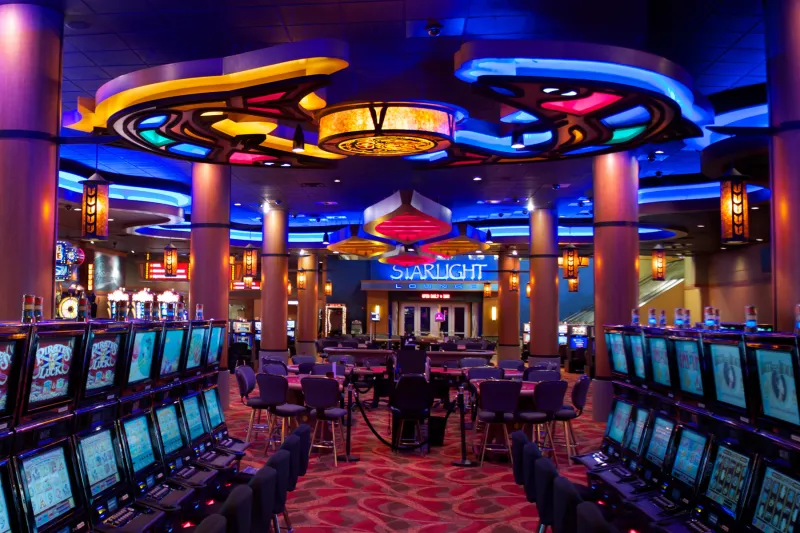
Photo: Benjamin Reed, CC BY-SA 2.0, via Wikimedia Commons
There's something undeniably compelling about watching a real person shuffle a real deck of cards on your phone screen at 11 p.m. on a Tuesday. Live dealer games have exploded in popularity across US online casinos, and it's easy to see why. They scratch that Atlantic City itch without requiring you to leave your couch. But here's the question we hear constantly from readers: does having an actual human dealer change your odds?
Short answer — no. Longer answer — let's dig into why, because the reasoning is genuinely fascinating and will make you a smarter player.
What's Actually Happening When You Play Live Dealer
When you load up a live blackjack or roulette table at a platform like BetMGM, DraftKings Casino, or Caesars Palace Online, you're connecting to a dedicated studio — usually located in New Jersey, Pennsylvania, or international hubs — via a high-definition video stream. A trained dealer manages the physical cards, chips, or roulette wheel in real time.
Behind the scenes, optical character recognition (OCR) technology reads the physical game elements — card values, roulette outcomes — and translates them into digital data your screen can display and your bets can respond to. The game outcome is determined by physical reality: a card really is drawn, a ball really does land on a number.
This is the key distinction from standard online casino games, which use a Random Number Generator (RNG) — a complex algorithm that simulates randomness without any physical component. RNG games are audited and certified, but they're entirely software-driven.
RNG vs. Live Streaming: Two Different Engines, Same Destination
Here's where players get tripped up. Because RNG games are software-based, some players assume they can be manipulated or that the randomness is somehow "less real." That's a misconception — licensed RNG software undergoes rigorous third-party testing from companies like eCOGRA and GLI. But the feeling of distrust persists, which is a big reason live dealer games have grown so fast.
The irony? When it comes to your actual probability of winning, both formats deliver the same mathematical outcome — because the house edge is baked into the rules of the game, not the delivery mechanism.
Take blackjack. A standard six-deck blackjack game with Vegas-style rules carries a house edge of roughly 0.5% when played with perfect basic strategy. That number doesn't change whether a digital avatar flips your card or a dealer in a studio does it with a physical shoe. The rules — when the dealer hits on soft 17, whether doubling down is allowed, how blackjack pays — are what set the edge. Not the hands dealing them.
The "Hot Dealer" Fallacy and Why Your Brain Loves It
Human beings are pattern-recognition machines. We're wired to find meaning in sequences, assign personality to outcomes, and believe that a smiling dealer is somehow luckier than a stern one. This is called the gambler's fallacy when applied to outcomes, but in live dealer games it takes on a social dimension.
Players will follow a dealer on a "hot streak," tip them (in jurisdictions where that feature exists), and feel genuine disappointment when a shift change happens mid-session. None of that changes the probability of the next hand. The deck doesn't know the dealer's name.
What live dealer games do change is the pace of play. Because a human is physically handling cards and chips, hands per hour tend to be slower than RNG games. Counterintuitively, that's actually a mild strategic advantage — fewer decisions per hour means your bankroll is exposed to the house edge less frequently in a given time window. If you're playing $25 hands and averaging 40 hands per hour instead of 80, you're reducing your theoretical hourly loss by half.
Where the House Edge Actually Lives in Live Games
If you're playing live dealer games at a licensed US casino, the house edge is posted or calculable from the posted rules. Here's a quick reference for the most common live formats:
- Live Blackjack (6-deck, S17, DAS): ~0.5% with basic strategy
- Live Roulette (American, double zero): 5.26%
- Live Roulette (European, single zero): 2.7%
- Live Baccarat (Banker bet): ~1.06%
- Live Three Card Poker (Ante + Play): ~3.37%
Notice that the roulette numbers are identical to their RNG counterparts. An American roulette wheel has 38 pockets — 18 red, 18 black, and two green zeros — whether it's spinning in a New Jersey studio or rendered by software. The math is the math.
Side Bets: Where Live Dealer Tables Get Expensive
One area where live dealer games can actually hurt your bankroll more than standard RNG versions is side bets. Live tables are designed to be entertaining and social, and operators lean heavily on side bet options — Perfect Pairs in blackjack, Dragon Bonus in baccarat, Lucky Ladies, and more.
These bets carry house edges that often range from 3% to over 10%. The live environment makes them feel like fun, spontaneous additions to the experience. They're not. They're high-cost propositions dressed up in good lighting and a friendly smile. Stick to the main bet, use basic strategy, and treat side bets as an occasional entertainment splurge rather than a regular play.
How to Score Better in a Live Dealer Session
If you love live dealer games — and plenty of players genuinely do, for the atmosphere and pacing — here's how to play smarter:
- Choose single-zero roulette when available. It cuts the house edge nearly in half compared to American roulette.
- Play basic strategy in blackjack. The human dealer doesn't change the math, but your decisions do.
- Ignore streaks. A dealer who's "been cold" is not due for a player-friendly run. Each hand is independent.
- Use the slower pace strategically. Fewer hands per hour is a genuine bankroll management benefit. Don't rush.
- Skip most side bets. The house edge on those extras is often ten times the main game.
The Scorecard Verdict
Live dealer games are one of the genuinely great innovations in online gambling. The experience is immersive, the social element is real, and for players who feel uneasy about pure RNG games, the physical transparency of a live stream offers peace of mind.
But the house edge doesn't take a day off for authenticity. The math governing your probability of winning is identical to every other version of the same game. What you're paying for — and it's worth something — is the experience. Just make sure you're paying for it knowingly, with eyes open and bankroll managed accordingly.
Know the edge. Play the game. Keep score.